
Inaka
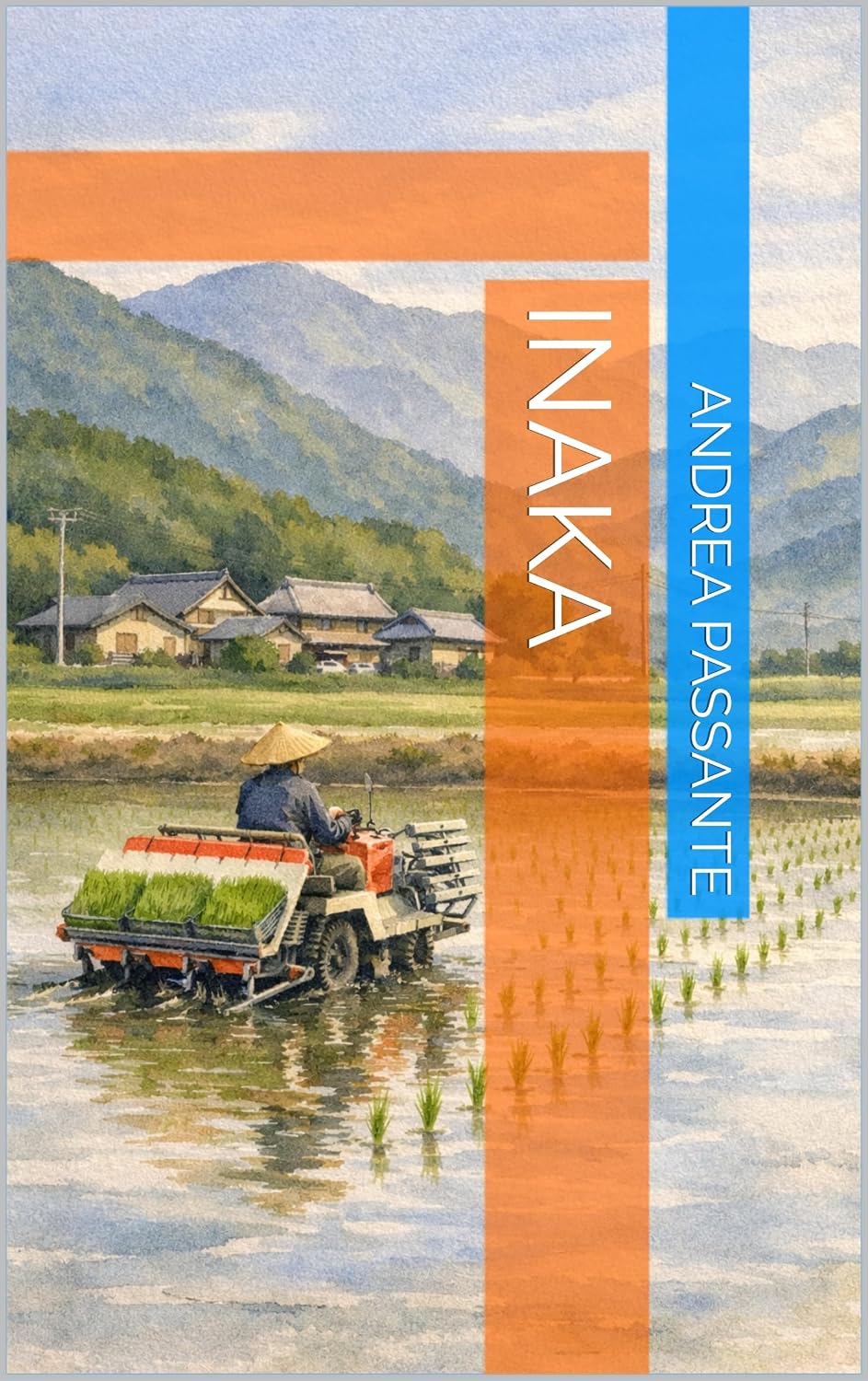
Far from home and struggling to find her place, one young woman discovers that home may not be where she expected it to be.
Charlie Spicer finds the letter from the JET Programme wedged under a rejection from a job in Canary Wharf she didn't even get — and for a moment, she genuinely can't remember applying. She probably did, on some forgotten evening when the future felt like something to solve rather than live through. But it hardly matters now. It's something to do, at least, and two years in Japan will look better on a CV than another year of nothing much in London.
She's posted to Oguni, a small mountain town buried in rural Yamagata — about as far as it's possible to get from anywhere she's ever pictured herself. What follows isn't an adventure, not at first. It's the careful, unglamorous project of getting through: the cold that settles into the bones and doesn't leave, the neighbours who turn up at her door bearing hot food and a kindness she doesn't yet have the language, literal or otherwise, to properly receive. And then there's Kudo Ryuko, a history teacher with a habit of noticing things other people miss, who tells her — almost in passing, on an ordinary February morning — to look up. It's a small moment. It changes everything that comes after it.
Inaka is the Japanese word for the countryside — for the rural, for whatever isn't the city — and this is a novel about a year spent in exactly that kind of place: one Charlie didn't choose, and couldn't wait to leave, until she suddenly wasn't so sure. The book moves with the full turn of the seasons — plum blossom arriving quietly before the cherry blossom takes the credit, the wisteria she must have walked past a hundred times before she actually saw it, the noise and heat of a summer matsuri, the long work of harvest, the mountains catching fire with colour in October. Underneath all of it runs the same quiet question, never quite answered until it suddenly is: what does it take to belong somewhere you never expected to end up?
Reading level
| Dimension | Assessment |
|---|---|
| Sentence structure | B1+/B2 |
| Core vocabulary | B1/B1+ |
| Idiom & colloquial English | B2 |
| Figurative & abstract language | B2 |
| Cultural references | B2 |
| Irony & humour | B2 |
| Subtext & inference | B2 |
| Supported classroom use | B1 |
| Independent reading | B2 |
Why two levels? In the classroom, teacher guidance, discussion, glossaries and chapter materials provide support for British idiomatic English, cultural references, figurative language and implied meaning. Independent readers need to recognise Charlie's changing relationship with Oguni and the novel's understated humour without scaffolding, so a higher reading level is recommended.